Case study

Cloud-Native Application Development for a Scalable Background Screening Platform

How we consolidated five acquired businesses into one cloud-native platform and enabled 84% of screenings to be completed in less than 24 hours.

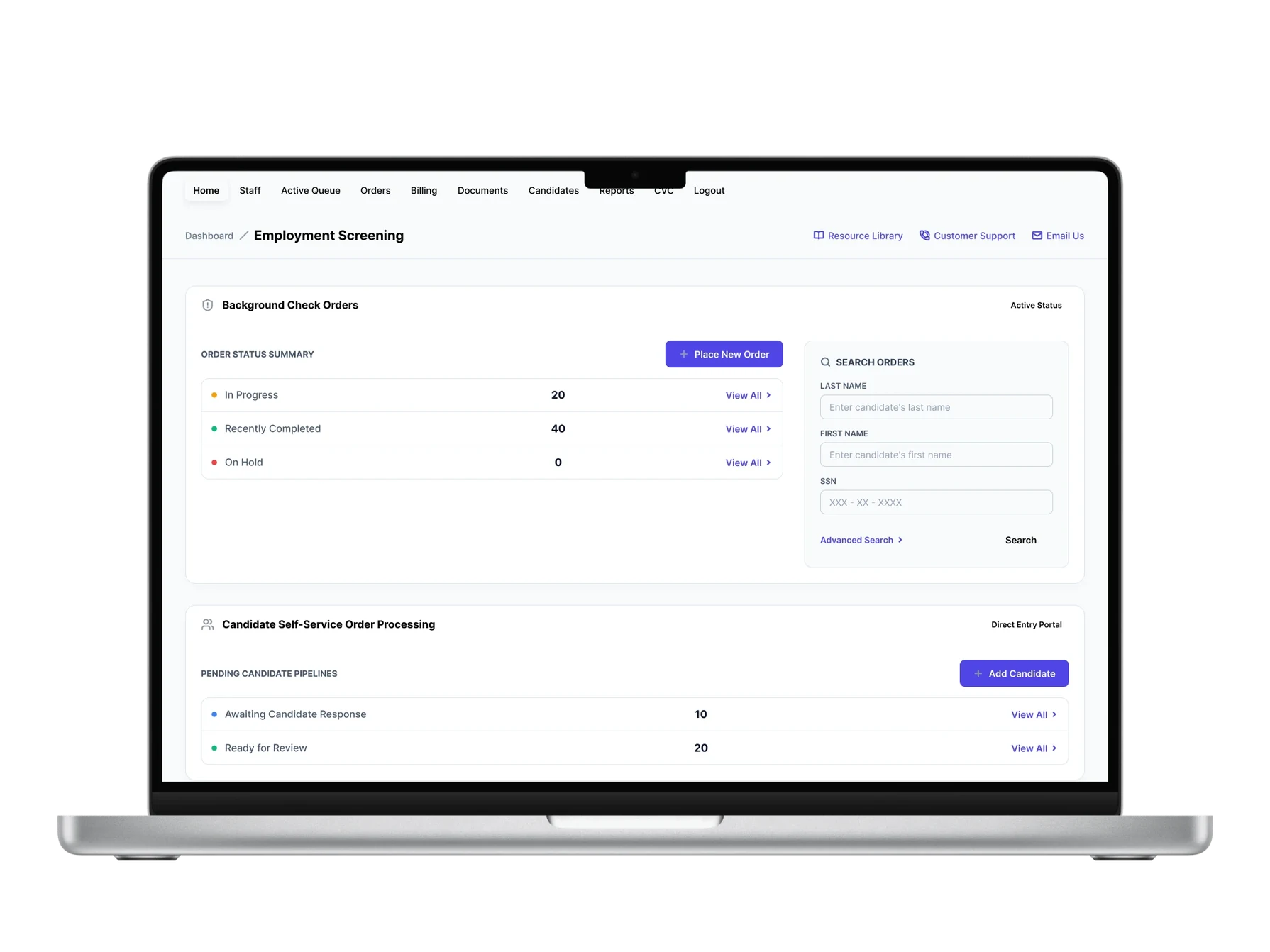
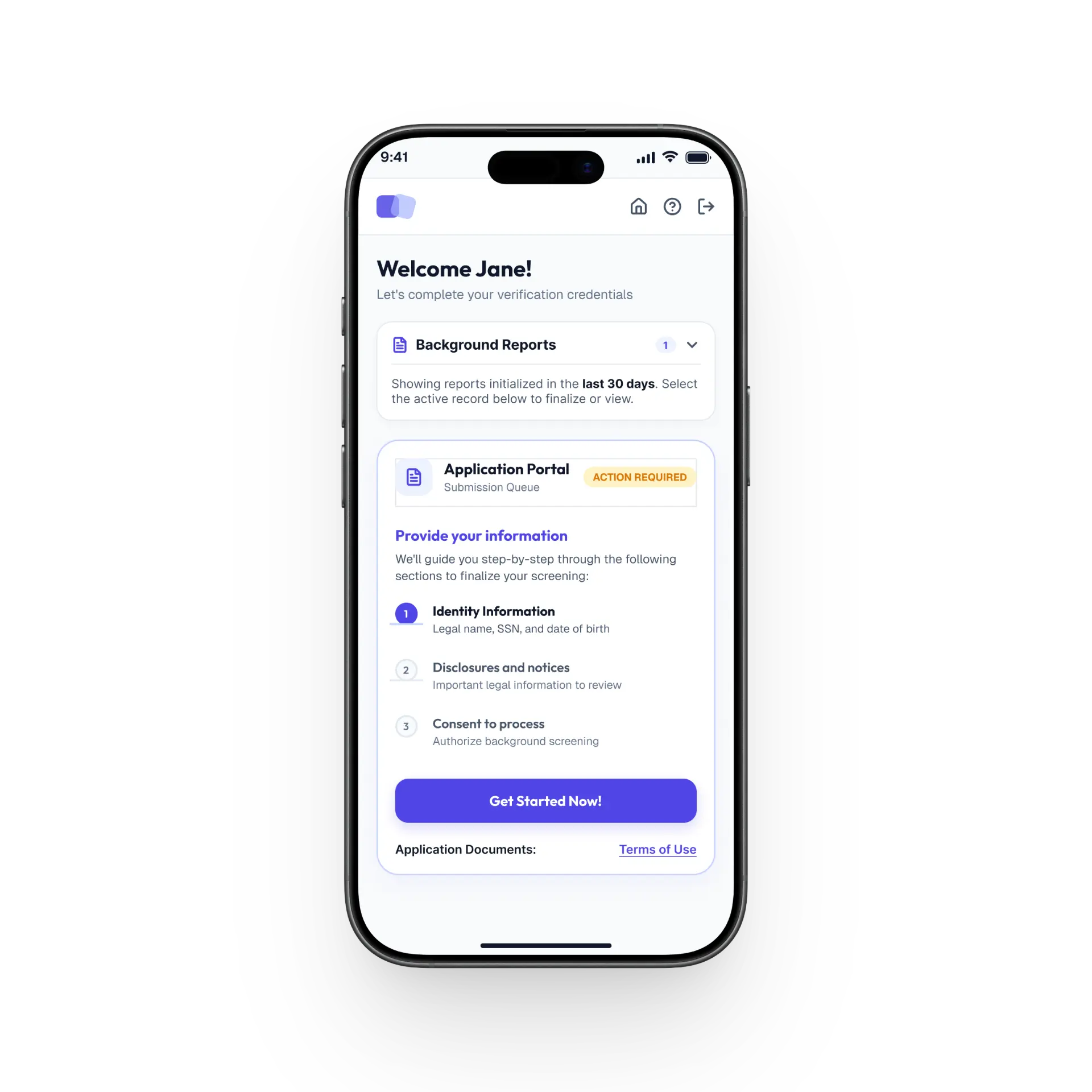
Titan desktop application screenTitan mobile application screen
Our ProjectsCloud-Native Application Development for a Scalable Background Screening Platform

Metrics

5

acquired businesses consolidated into one platform

84%

of screenings completed in less than 24 hours

2.6 days

Avg. Order turnaround times ranging from a few hours to 2.6 days

Project Description

We helped a leading U.S. background screening provider rebuild its core software platform from the ground up. Through a comprehensive cloud-native application development initiative, we replaced several fragmented systems with a unified platform built on Microsoft Azure. The new solution supports end-to-end background screening operations, automates complex workflows, connects with external providers through secure APIs, and gives clients, candidates, and internal teams greater visibility into every order.

The resulting cloud-native architecture provides the scalability, automation, observability, and operational flexibility the client needs to introduce new products, onboard customers, integrate future acquisitions, and continue its digital transformation.

Client

The client is a U.S.-based provider of background screening and verification services.

The company serves employers, educational institutions, volunteer organizations, contractors, and individual consumers. Its services help organizations conduct compliant background checks and make informed decisions about hiring, enrollment, and engagement.

The client operates in an integration-heavy, highly regulated environment. Its platform must communicate with external data providers, screening vendors, CRM systems, financial platforms, notification services, and compliance-related systems while protecting sensitive personal information.

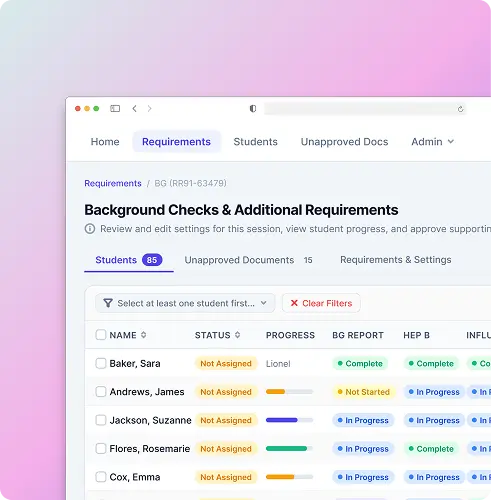
Background checks and additional requirements dashboard

Problem

The client had inherited several disconnected systems through acquisitions and mergers.

Different business units relied on different applications, workflows, integrations, and user experiences, making operations increasingly difficult to scale and maintain.

The client needed a unified platform designed around its business processes, compliance obligations, integration ecosystem, and long-term growth strategy.

Key challenges included:

  • Fragmented systems across multiple acquired businesses
  • Limited scalability and inconsistent performance
  • Complex order-processing logic hidden in legacy code
  • Heavy reliance on manual operational tasks
  • Limited visibility into screening progress
  • An outdated experience for clients and candidates
  • Difficult onboarding of new products, customers, and integrations
  • High software development and maintenance costs
  • Dependence on third-party systems with limited customization options
  • Complex security, privacy, and regulatory requirements

Solution

The platform was built and deployed in the Microsoft Azure public cloud, using cloud computing to provide a scalable, secure, and highly available environment for hosting business-critical background screening services.

The cloud-native architecture used loosely coupled microservices, Docker containers, Kubernetes, APIs, and asynchronous messaging. This allowed individual services to be developed, deployed, and scaled independently.

The platform supported:

  • End-to-end order management
  • Product fulfillment
  • Client and candidate portals
  • Internal operations
  • Vendor integrations
  • Workflow automation
  • Real-time notifications
  • Monitoring and observability

<1/6>

Modular, Loosely Coupled Architecture

The platform was organized around modular business capabilities, reusable components, and loosely coupled integration services. Compute services were configured to support autoscaling, allowing the platform to automatically adjust resources based on workload demands and maintain consistent performance during peak activity.

  • Asynchronous messaging through Azure Service Bus reduced direct dependencies between system components. This approach improved fault isolation, supported more reliable background processing, and made it easier to update individual capabilities without disrupting the entire platform.
  • The modular cloud-native architecture also created a more scalable foundation for introducing new products, supporting additional business units, and integrating future acquisitions.
  • Backend services were packaged as container images, providing a consistent deployment model across environments and simplifying application delivery and maintenance.

Visual Workflow Orchestration

The legacy platform contained complex screening processes embedded directly in application code. These workflows were difficult for business stakeholders to see and difficult for developers to modify safely.

We implemented BPMN-based workflow orchestration using Camunda. Screening processes, approvals, fulfillment activities, and status transitions could now be represented visually rather than remaining hidden inside the codebase.

This made workflows easier to:

  • Understand
  • Configure
  • Test
  • Audit
  • Maintain
  • Adapt to new business and regulatory requirements

Business and technical stakeholders gained a shared view of how each process worked, reducing ambiguity and improving collaboration.

Integration Framework and APIs

Background screening depends on a large ecosystem of data providers, verification services, CRMs, financial platforms, and notification tools. Each third-party provider had its own technical requirements, application programming interfaces, data formats, response times, and operational constraints.

We created isolated integration components supported by asynchronous messaging and background workers. This reduced coupling between the core platform and external providers while improving reliability and maintainability.

The integration framework supports connections with:

  • Screening and verification vendors
  • External data providers
  • CRM systems
  • Financial platforms
  • Compliance-related services
  • Email and notification providers
  • Business partners

Because integrations are separated from core business logic, the client can add, replace, or update external providers more efficiently.

Cloud Infrastructure and DevOps Automation

The platform was built using Microsoft Azure cloud services and managed cloud infrastructure. Cloud infrastructure was provisioned and managed using Infrastructure as Code (Bicep), enabling consistent, repeatable deployments across environments and simplifying infrastructure maintenance.

Automated CI/CD pipelines in Azure DevOps support continuous integration, testing, security validation, and continuous delivery. This allows the engineering team to release improvements more consistently while reducing the risks associated with manual deployments. Feature flags provide additional control over how new functionality is introduced. Teams can gradually enable features, validate them in production, and respond to changing business priorities without coordinating large, disruptive releases.

The cloud app development approach improved:

  • Deployment consistency
  • Release reliability
  • Development efficiency
  • Time to market
  • Operational visibility
  • Scalability
  • Long-term maintainability

Performance and Data Optimization

The platform processes large volumes of screening data and supports products with highly dynamic structures.

To address performance bottlenecks, we introduced:

  • Optimized data-access patterns
  • Distributed caching with Redis
  • Background processing
  • Asynchronous messaging
  • Workflow orchestration
  • Application performance monitoring

These improvements help the platform process complex orders more efficiently while maintaining a responsive experience for internal teams, clients, and candidates.

Security and Compliance by Design

The platform processes sensitive personal information for U.S. and international candidates and operates in a highly regulated environment. Security and compliance requirements were incorporated throughout the software development process rather than added after implementation.

The solution includes:

  • Microsoft Entra authentication
  • Role-based access control
  • Granular permission management
  • Encrypted and masked data handling
  • Secure secrets management through Azure Key Vault
  • Automated OWASP security scanning
  • Audit-ready workflow records
  • Configurable document and disclosure processes
  • Continuous monitoring and incident visibility

Configurable workflows and document-management capabilities help the client respond to evolving requirements under the Fair Credit Reporting Act, state regulations, and jurisdiction-specific disclosure and communication rules.

Succeed faster with Syberry

If you submit a request today, your MVP will be ready
as early as April 19, 2027

Key Features

Monitoring and Observability

Azure Application Insights and the Elastic Stack provide centralized logging, tracing, performance monitoring, and incident-management capabilities. This observability helps teams identify bottlenecks, investigate failures, and understand platform behavior across complex workflows and integrations.

Mobile-First Candidate Experience

Candidate-facing workflows are optimized for mobile devices and provide clearer instructions, greater transparency, and the ability to reuse previously submitted information.

Client Self-Service Portal

Clients receive real-time visibility into background check progress, order status, and required actions. Configurable account settings allow organizations to tailor the platform to their operational needs.

Unified Background Screening Platform

A single ecosystem now supports multiple acquired businesses, business units, screening products, and operational teams.

Automated Order Processing

The platform automates order creation, fulfillment tasks, approvals, communications, and status transitions, reducing manual work and improving consistency.

BPMN-Based Process Orchestration

Camunda provides visual workflow modeling for complex screening and compliance processes, making business logic more transparent and manageable.

Internal Operations Portal

Fulfillment teams can manage tasks, monitor key performance indicators, investigate issues, and optimize processing efficiency from one interface.

Reusable Integration Framework

Isolated integration components support external vendors, screening providers, CRM platforms, financial systems, and notification services.

Role-Based Access Control

Granular permissions help ensure that users can access only the information and actions appropriate to their roles.

Real-Time Notifications

Automated notifications keep clients, candidates, vendors, and internal teams informed as orders move through each workflow.

Serverless Azure Functions

Selected platform capabilities were implemented using Azure Functions, enabling serverless execution for event-driven workloads while reducing operational overhead and improving resource efficiency.

AI-Assisted Engineering

To accelerate delivery without compromising quality, our engineering team incorporated AI-assisted workflows into its daily development practices. AI was used as an engineering productivity tool—not as an autonomous replacement for developers. Architecture, security, implementation, and production decisions remained under full human ownership.

Developers used AI agents to conduct preliminary code reviews before submitting pull requests. This helped identify potential issues earlier, improve code consistency, and reduce the amount of routine review work required from senior engineers.

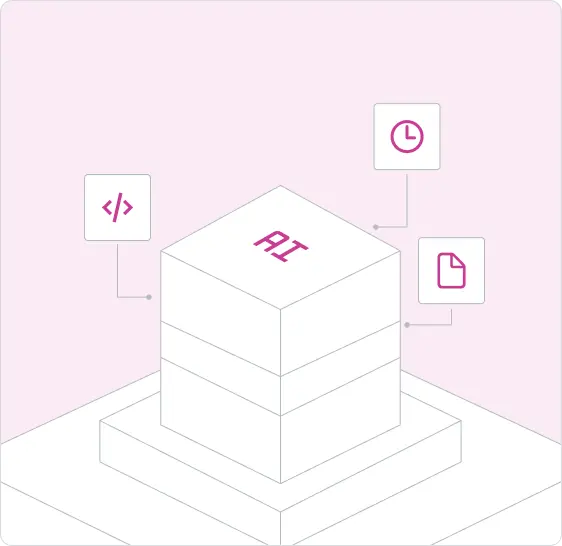
AI-assisted engineering illustration with isometric blocks and connected capability icons

The use of AI-assisted engineering helped the team shorten development cycles, improve code-review efficiency, and maintain quality through human-led validation.

The outcome

The project gave the client a scalable cloud-native foundation for continued growth, product development, and future acquisitions.

From a technology perspective, the platform transformed difficult-to-maintain business logic into a modular, observable, and configurable system.

From a business perspective, it gave the client the flexibility to grow without continuing to add disconnected applications, manual workarounds, and costly technical debt.

5

acquired businesses consolidated into one platform. The project replaced fragmented systems inherited through acquisitions with a unified platform supporting multiple business units.

84%

of screenings completed in less than 24 hours. Workflow automation, optimized processing, asynchronous messaging, and scalable cloud infrastructure helped the platform complete most screenings within one day.

2.6 days

Average turnaround times ranging from a few hours to 2.6 days. Turnaround times vary by screening type and complexity, with average processing ranging from several hours to 2.6 days.

Additional outcomes include:

  • Increased workflow automation

  • Reduced manual operational effort

  • Improved order turnaround times

  • Greater visibility into every background check

  • Better experiences for clients, candidates, and internal teams

  • Faster onboarding of new clients and screening of products

  • Easier integration with external providers

  • Improved fault tolerance and platform availability

  • Automated scaling during demand increases

  • Faster and safer software releases

  • Improved portability across cloud environments

  • Stronger security and compliance controls

  • Greater observability across workflows and services

  • Reduced dependence on monolithic applications

  • Readiness for future acquisitions and business expansion

Technologies

Technologies We Use

Our AI consulting and development team works across the leading AI frameworks, cloud platforms, and data science tools, selecting the right stack for your specific requirements rather than defaulting to a single ecosystem.

Adobe XD
Angular
Ansible
Apache JMeter
Apache Spark
Appium
AWS
Microsoft Azure
BlazeMeter
Braintree
Bugzilla
Burp Suite
CircleCI
AWS CloudFormation
C#
Cucumber
Cypress
Dart
DigitalOcean
Django
Docker
.NET
ELK Stack
Figma
Zeplin
Flutter
Gatling
GitHub
GitLab
Go
Google Cloud
Grafana
GraphQL
HubSpot
IBM Cloud
InVision
Java
JavaScript
Jenkins
Jira
Keras
Kotlin
Kubernetes
Laravel
LoadRunner
Mailchimp
Mantis
MongoDB
Firebase
NLP
Node.js
OpenAI
OpenCV
OpenStack
Oracle
MySQL
Puppet
DynamoDB
PostgreSQL
OWASP
PayPal
PHP
Postman
Power BI
Prometheus
Python
PyTorch
React
REST API
Robot Framework
Ruby on Rails
Salesforce
scikit-learn
Selenium
Sketch
Spring Boot
Stripe
Swift
Tableau
TensorFlow
Tenable
Terraform
Twilio
TestNG
Vue.js
Webhook
Zoho

Frontend

React, NX Monorepo, Redux, React Query, React Hook Form, Microsoft Authentication Library

Backend

ASP.NET, Entity Framework Core, MediatR, Camunda BPMN Engine, Background Workers

Cloud and Infrastructure

Microsoft Azure, Azure Service Bus, Azure Blob Storage, Azure Key Vault, Azure Application Insights, Elastic Stack, Redis

Engineering and Quality

Azure DevOps, CI/CD pipelines, Automated testing, SonarQube, Feature flags, OWASP security scanning

Succeed faster with Syberry

If you submit a request today, your MVP will be ready
as early as April 19, 2027

This site is protected by reCAPTCHA and the Google Privacy Policy and Terms of Service apply.