Legacy Application Modernization Services
Syberry transforms outdated systems into cloud-native, scalable platforms at 3 to 4 times the speed of traditional development, anchored by a Human-in-the-Loop (HITL) system that keeps your engineers in control without the risk of a pure-AI rewrite.
We've helped organizations in healthcare, finance, and energy cut operational costs, eliminate security vulnerabilities, and drive digital transformation.
Brief Overview
Modernize Your Legacy Systems Faster with AI

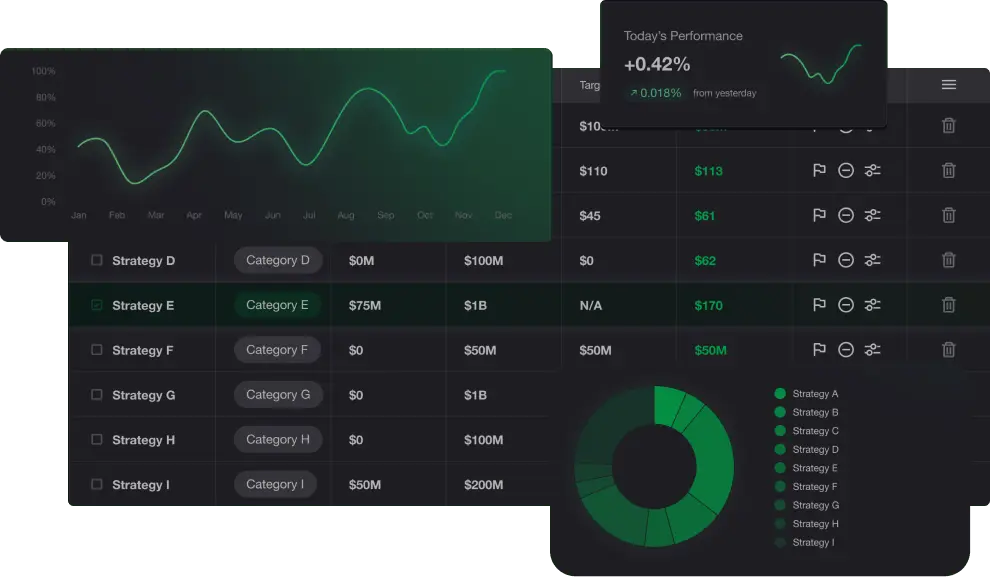
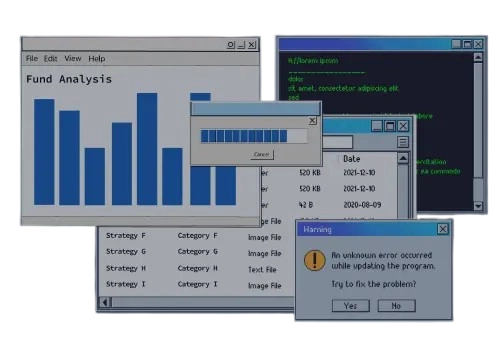
AI-Driven Modernization
3-4x Faster, with Humans at the Controls
Syberry's AI-powered methodology uses large language models and intelligent automation to analyze your codebase, map hidden dependencies, document undocumented legacy code, and accelerate refactoring and migration. What used to take months now takes days.
But AI alone isn't the answer. Every Syberry engagement is built around a Human-in-the-Loop (HITL) system:

Your engineers and domain experts approve AI-generated plans before any code is touched.

Senior engineers validate automated refactoring decisions, catching edge cases AI misses — critical in healthcare and finance.

Business logic is extracted, verified, and preserved, not silently discarded.

CI/CD pipelines provide continuous validation throughout the modernization journey.
The outcome: 3 to 4 times the velocity of traditional approaches, with reduced maintenance costs and systems ready for digital transformation.
Key capabilities
Our Legacy System Modernization Capabilities
No two legacy systems are alike, and no single modernization approach fits every situation. Syberry offers a full spectrum of modernization solutions, from quick-win rehosting to full re-architecting, with our AI-driven analysis informing the right strategy for your specific codebase, business goals, and timeline.
Our comprehensive suite of services ensures a tailored modernization approach:
Value for the client
Why Modernizing Legacy Applications Can No Longer Wait
Modernizing legacy applications offers numerous benefits:


Our clients















Streamline Your Success
Software strategy session
Whether it is an existing enterprise software system or a brand-new startup, we offer a no-charge strategy session, which can bring value to the table almost in real-time. We learn about your unique needs and share how to streamline your operations by using bespoke, cost-effective custom software solutions.
Features for Modernizing Legacy Systems
Our modernization solutions are characterized by:
AI-Driven Code Analysis and Automated Refactoring
Before a single line of your codebase is changed, our AI-powered tools map every dependency, identify technical debt, flag security vulnerabilities, and generate documentation for years of undocumented legacy code. Analysis that would take a team of engineers weeks to complete manually is completed in days.
Human-in-the-Loop (HITL) Quality Control
AI accelerates modernization, but humans make it trustworthy. Syberry's HITL system means every AI-generated assessment, refactoring plan, and migration decision is reviewed and validated by our engineers and your domain experts before implementation.
Cloud Migration
From on-premises infrastructure to the cloud platforms your business needs — AWS, Azure, or Google Cloud — using the strategy that fits your timeline and goals. Every migration is designed to reduce operational costs, eliminate on-premises maintenance overhead, and give your organization the elastic scalability to grow without infrastructure as a ceiling.
Microservices Architecture
Designing applications as a collection of loosely coupled services. The result is a modular architecture where your team can ship new features without touching unrelated systems, outages are contained rather than catastrophic, and your software systems can grow with your business instead of constraining it.

API Development and Ecosystem Integration
We design and build the APIs that connect your modernized systems to the tools, platforms, and partners your operations depend on — ERP systems, third-party data providers, cloud services, and customer-facing applications. Modern APIs also unlock the real-time data access and analytics capabilities that legacy systems structurally cannot provide, and they future-proof your architecture for the integrations your business hasn't yet imagined.
Cybersecurity Modernization
Our modernization process eliminates security risks systematically: updating or replacing vulnerable dependencies, implementing modern authentication and authorization controls, and ensuring the modernized system meets current cybersecurity standards. For regulated industries, we align with HIPAA, SOC 2, and other applicable frameworks throughout the modernization process.
Containerization and DevOps Integration
Containerization packages your applications and their dependencies into portable, consistent units that run identically across any environment. Combined with CI/CD pipelines and DevOps practices, containerization transforms the way your modernized systems are deployed and evolved: faster releases, automated testing, lower downtime risk, and a development workflow that stays agile as business requirements change.

Compliance-Ready Architecture for Regulated Industries
Syberry builds compliance requirements into the architecture from day one. We design data handling, access controls, audit logging, and system boundaries to align with the regulatory frameworks governing your industry, so your modernized systems are compliant on day one of deployment, not retrofitted for compliance months later.
Why Choose Syberry
We are a custom software development company with extensive experience in legacy application modernization, backed by deep expertise in both modern and older technologies. With over 200 successful projects across industries like real estate, healthcare, and finance, we deliver scalable, future-proof solutions that drive operational efficiency and business growth.
We follow a systematic modernization process, from assessment and rehosting to refactoring and re-architecting, using best practices and agile methodologies to ensure seamless transitions and high-quality results.
We are here to help you, so we tailor every modernization strategy to your unique business goals, involving stakeholders at every step to ensure the updated system improves user experience, meets compliance needs, and supports long-term objectives.
Our HITL modernization efforts help compress timelines by 3 to 4 times while ensuring that every AI-generated insight, plan, and code transformation is reviewed and validated by our engineers before implementation. Speed without the recklessness.
With hands-on experience in mainframes, on-premises systems, and cloud-native architectures, we're equipped to modernize legacy applications into future-ready, scalable solutions with optimized performance and functionality.
Read more
Our process
Our Legacy App Modernization Process
Initial Assessment & Ideation
Discovery
Engineering & Testing
Deployment & Support
PHASE 1: Initial Assessment & Ideation
Defining the Vision & Scope
Business & Process Analysis
Identify goals, business requirements, challenges, inefficiencies, and define the initial vision and scope.
Technology & Architecture Vision
Define the tech stack, infrastructure, and integrations.
Estimate & Roadmap
Outline project scope, methodologies, deliverables, timeline, and development cost.
PHASE 1
PHASE 2
PHASE 3
PHASE 4



BEST PRACTICES
Best Practices in Legacy App Modernization
Working on every modernization strategy, our engineering team utilized industry best practices to achieve the best results for our legacy app modernization projects.
Incremental Modernization
Gradually updating components to minimize downtime and disruption of business operations.
Continuous Integration and Deployment
Implementing CI/CD pipelines for efficient development cycles.
User-Centric Design
Focusing on enhancing user experience throughout the modernization process.
Security-First Approach
Prioritizing security at every stage of development.
Performance Optimization
Ensuring applications are optimized for speed and scalability.
Technologies we use

Java

JavaScript

.NET

Python

Spring Boot

Angular

React

Node.js

AWS

Microsoft Azure

Google Cloud

MySQL

PostgreSQL

MongoDB

Oracle

Docker

Kubernetes

Jenkins

GitLab
FAQs
FAQ's
Common questions about legacy application modernization
What is legacy application modernization?
Legacy application modernization is the process of transforming outdated software systems — often monolithic, on-premises platforms built on outdated technologies — into modern, scalable, cloud-native solutions that align with current business needs. The goal is to reduce technical debt, eliminate security vulnerabilities, lower maintenance costs, and enable the new features and integrations that drive business growth. Modernization approaches range from lift-and-shift rehosting to full re-architecting and reengineering.
How does Syberry use AI in legacy software modernization?
Syberry uses AI to accelerate the analysis, planning, and execution of modernization projects — delivering results at 3 to 4 times the speed of traditional approaches. Our AI-powered tools analyze legacy codebases to map hidden dependencies, generate documentation for undocumented systems, identify technical debt and security risks, and propose safe refactoring and migration plans. All AI-generated outputs are validated by our engineers and your domain experts through our Human-in-the-Loop (HITL) system before implementation, ensuring accuracy and preserving critical business logic.
How long does a legacy modernization project take?
Timelines vary depending on the complexity of your existing systems, the modernization approach selected, and the scope of the project. With Syberry's AI-driven methodology, projects are completed at 3 to 4 times the speed of traditional development. Simple rehosting or replatforming engagements can complete in weeks; comprehensive re-architecting of complex enterprise systems may take six to eighteen months. You'll receive a clear project roadmap with defined milestones during the Discovery phase.
Will software modernization disrupt our current operations?
Our incremental approach ensures minimal disruption during the transition. We use feature flags, phased migration, and extensive testing to ensure business continuity at every step. Downtime risk is actively managed rather than accepted as inevitable.
Is legacy modernization worth the cost?
For most organizations, the question is not whether to modernize — it's how long they can afford to wait. Organizations maintaining legacy systems typically spend 60 to 80 percent of their IT budgets on maintenance alone. Modernization reduces those maintenance costs significantly while enabling new capabilities, improving security posture, and accelerating time to market. The long-term return on a well-executed modernization project consistently exceeds the investment.
What is the difference between rehosting, replatforming, refactoring, and re-architecting?
These are four distinct modernization strategies along a spectrum of depth and investment. Rehosting (lift-and-shift) moves your application to cloud infrastructure with minimal changes — fastest, lowest cost, fewest cloud-native benefits. Replatforming makes targeted optimizations during migration to take advantage of managed cloud services. Refactoring restructures your existing codebase to improve performance, maintainability, and security without changing external behavior. Re-architecting redesigns the application as cloud-native microservices, delivering the greatest scalability and long-term agility. The right approach depends on your business goals, timeline, and the current state of your systems.
How do you handle healthcare, financial, or other regulated industry requirements?
Compliance is built into every stage of our modernization process, not added afterward. For healthcare clients, we maintain HIPAA compliance throughout, including in data migration, access controls, and the modernized system architecture. For financial services and other regulated industries, we incorporate the relevant regulatory requirements into our technical architecture from the Discovery phase forward. Our team has direct experience with compliance-driven modernization in healthcare, finance, energy, and utilities.
What happens to our existing business logic and institutional knowledge?
This is one of the most critical risks in any legacy modernization project — and one that Syberry specifically addresses through our HITL process. Before any code is changed, our AI-powered analysis tools extract and document the business logic embedded in your legacy systems. Your domain experts then review and validate this documentation. The validated business logic is explicitly preserved in the modernized architecture, ensuring that years of institutional knowledge are carried forward rather than lost.
What Our Clients Say About Us
Reviewed on

5.0 rating
Reviewed on

4.8 rating
Succeed faster with Syberry
If you submit a request today, your MVP will be ready
as early as March 7, 2027